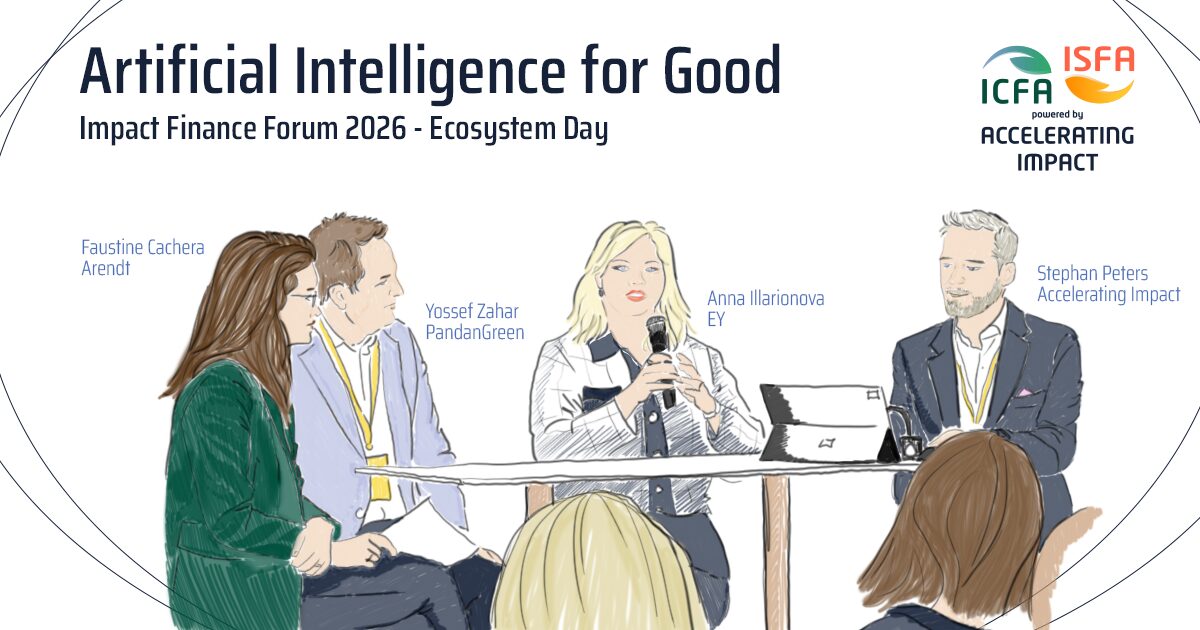
Key Insights from the Impact Finance Forum 2026 panel discussion moderated by Stephan Peters, CEO at Accelerating Impact
The rapidly evolving world of impact finance is marked by significant technological transformation, notably through the adoption of artificial intelligence (AI) and digital processes. Industry professionals, as highlighted in the panel led by Stephan Peters and featuring experts such as Yossef Zahar (Founder and CEO, PandanGreen, ICFA Cohort member), Faustine Cachera (Counsel, Arendt & Medernach), and Anna Illarionova (Consulting Senior Manager, ESG Services, EY Luxembourg), face increasing pressure to deliver more with fewer resources. While certain roles may disappear, the sector is poised to benefit from new opportunities, provided professionals adapt and embrace innovation.
1. Major Changes within Impact Finance
- Efficiency through Innovation: Microfinance institutions are rapidly adopting digital tools for client analysis, making processes more efficient and allowing professionals to focus on high-impact projects.
- Cost Pressures and Competition: Technology is driving down management fees, pushing organisations to review budgets and reinvest savings into initiatives that deliver real-world impact.
- Major Industry Shifts: The democratisation of information and open data are critical for collaboration and swift adaptation to market changes.
- Stay Proactive and Champion Innovation: Regular review of market trends and a willingness to challenge outdated practices are vital for staying ahead in a competitive landscape.
- Focus on Tangible Outcomes: Measuring and sharing project results, and using feedback to improve, ensures that efforts benefit both communities and the environment.
2. Key Risks
- Job displacement and the need for retraining: The integration of AI and digital platforms is likely to result in job losses across finance and related industries, necessitating robust upskilling and reskilling strategies for the workforce.
- Confidentiality concerns: Legal professionals emphasise the risks associated with client data security and the potential for breaches of client-attorney privilege in a digital environment.
- Regulatory and governance challenges: Strict compliance requirements, such as those relating to data protection (e.g., GDPI), and the necessity for well-developed AI governance frameworks may pose significant barriers if not properly addressed.
- Ethical and legislative issues: The importance of an ethical approach to AI, alongside evolving legislative frameworks, is paramount for industry credibility and sustainability.
- Energy consumption: The increased use of AI brings environmental concerns, particularly due to the high energy requirements and potential stakeholder impact.
- Limitations of digitalisation: Not all processes can be automated; some tasks require human creativity and judgement, highlighting the continued value of human input.
3. Key Opportunities
- Enhanced efficiency and cost reduction: AI enables faster client analysis, reduced operational costs, and lower management fees, especially in microfinance and asset management. Digital transformation streamlines processes and frees up resources for impactful projects.
- Democratisation of information: AI and digital platforms make information more accessible, fostering transparency, collaboration, and innovation within the sector.
- Industry transformation: Major shifts are underway, with FinTech and traditional finance converging, and digital factories optimising task execution and strategy.
- Strategic innovation: AI is a catalyst for fundamental changes in strategy, driving new ways of working and opening up greater opportunities for professionals willing to adapt.
- Compliance and sustainability: Algorithmic platforms and robust implementation support sustainable practices and regulatory alignment, enhancing industry credibility.
- AI literacy and leadership: Investment in AI education and the development of strong leadership will enable organisations to navigate future challenges and maximise opportunities.
4. Conclusions
- AI and digital transformation present both substantial risks and opportunities for finance and other industries. While automation and digitisation drive efficiency and open new avenues for growth, they also require careful management of ethical, legal, and governance challenges.
- Organisations must proactively develop robust AI strategies, integrate governance frameworks, and invest in workforce development to mitigate risks and maximise benefits.
- Creativity and human judgement remain essential, and leadership will be crucial in guiding industries through ongoing digital evolution and addressing potential gaps.
- The future of impact finance depends on adaptability. Those who embrace innovation, seek efficiencies, and challenge the status quo will be best placed to thrive and deliver lasting, positive outcomes for both communities and the planet as the sector continues to evolve.